Anemia investigation in cats using red blood cell indices
Anemia is frequently diagnosed in cats, and red blood cell (RBC) indices can be useful for investigating the underlying cause of feline anemia. A recent study describes laboratory findings associated with different types of anemia in cats.
Common causes of anemia in cats
Anemia is defined as a reduced oxygen-carrying capacity of red blood cells (erythrocytes) and is diagnosed by a lower-than-normal hemoglobin (HGB) concentration (1).
Typical clinical signs of anemia in cats include pale or white gums, reduced appetite, and lethargy. Anemia may be chronic or inherited, or caused by nutrient deficiencies, infectious or inflammatory disease, or blood loss.
The underlying mechanism may involve insufficient production of hemoglobin-containing RBCs or increased destruction of RBCs exceeding production capacity. The condition may be temporary or long-term, depending on the cause.

Anemia associated with impaired RBC production
Insufficient production of RBCs can be caused by vitamin B12 deficiency due to inadequate intake, increased consumption, or impaired absorption. Vitamin B12 is an essential cofactor for normal RBC proliferation and maturation. Deficiency may result in impaired DNA synthesis, leading to larger-than-normal, oval-shaped RBCs (macro-ovalocytes).
This type of anemia is typically characterized by normochromic (HGB within reference range) or hypochromic (HGB below reference range), macrocytic RBCs.
When hemoglobin synthesis is impaired, RBCs become smaller (microcytic). Iron is a critical component of hemoglobin, and iron deficiency is a common cause of defective HGB synthesis.
Iron deficiency may result from blood loss or insufficient intake, increased demand, or impaired absorption.
This form of anemia is characterized by unevenly small RBCs and altered RBC indices. Typical laboratory findings include decreased mean cell volume (MCV), increased anisocytosis, reflected by elevated red blood cell distribution width (RDW), and increased mean cell hemoglobin concentration (MCHC).
Anemia associated with defective hemoglobin synthesis
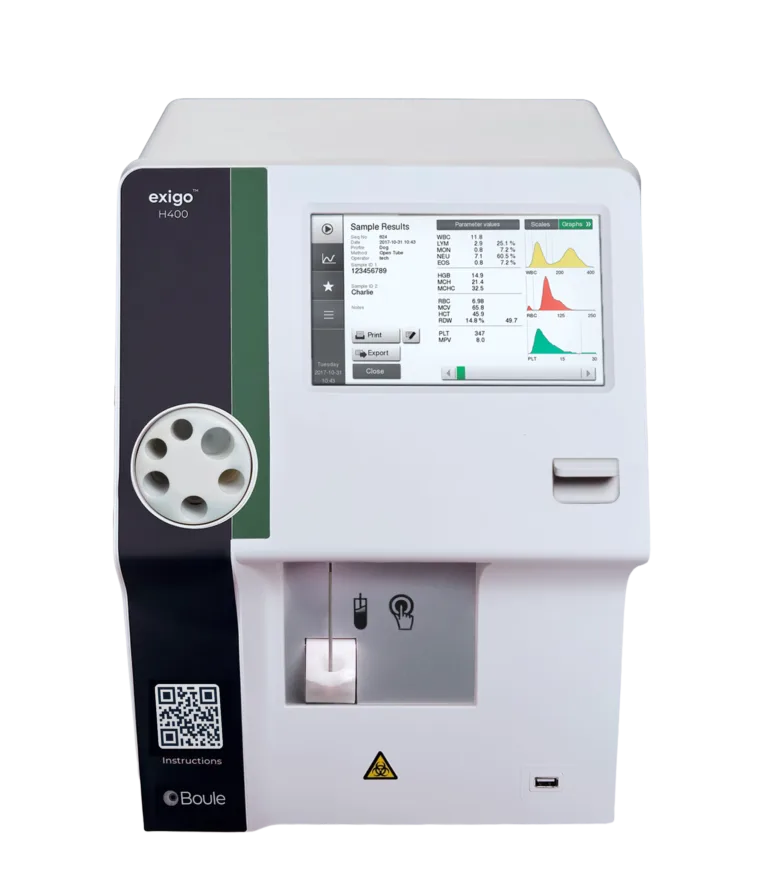
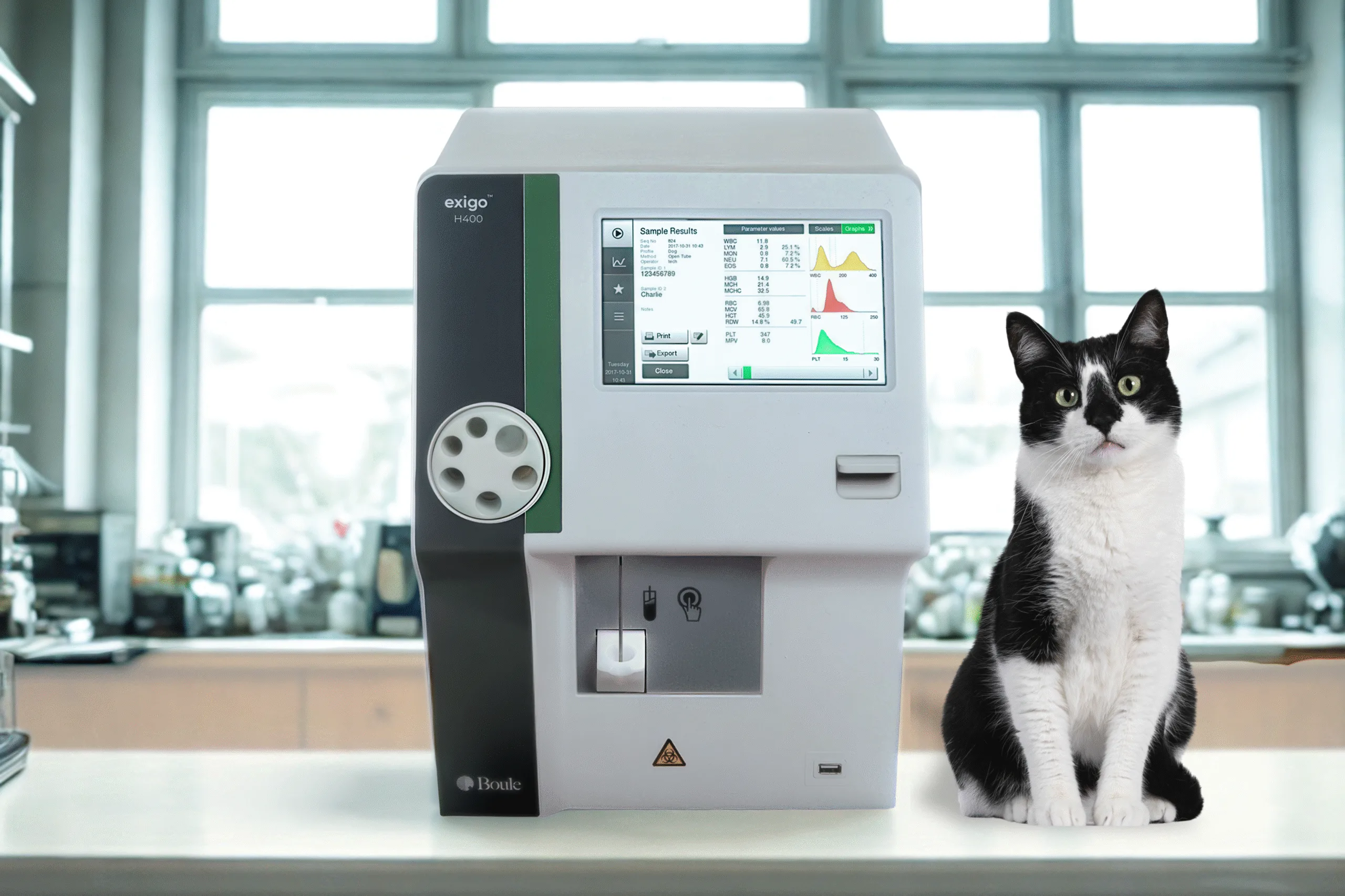
Nurul Hidayah and coworkers at West Sumatra Veterinary Hospital in Indonesia investigated RBC indices in anemic feline patients using the Exigo H400 veterinary hematology system (2). Their findings are summarized in Table 1, which outlines laboratory findings associated with different anemia types.
Based on the results, the authors concluded that classification of anemia using RBC indices can support identification of the underlying cause and help guide further diagnostic and therapeutic decisions.
Table 1. Laboratory findings and possible cause of anemia in cat patients

Anemia associated with defective hemoglobin synthesis
Automated hematology analysis can support evaluation of RBC indices in feline patients presenting with anemia. Such systems provide complete blood count (CBC) data, including RBC parameters and leukocyte differentials, which may assist veterinarians in identifying hematological patterns associated with different anemia types.