Prognostic value of the NEU-to-LYM ratio in female dogs with mammary tumors
Researchers in Mexico found the pre-treatment neutrophil-to-lymphocyte (NEU-to-LYM) ratio, a blood cell marker associated with systemic inflammation, to have prognostic value for survival after surgery in female dogs with mammary tumors.

Mammary gland tumors in dogs
Cancer is a major cause of death in dogs in the developed world (1). In female dogs, mammary gland tumors are the most common neoplasm, defined as abnormal and excessive growth of tissue (2). Diagnosis and assessment of the degree of malignancy, used to estimate prognosis, is mainly performed by histopathological examination of suspected tissue under the microscope (3, 4).
A biomarker that could indicate whether abnormal growth is more likely benign or malignant prior to surgery could support treatment planning and clinical decision-making.
NEU-to-LYM ratio as a prognostic marker
Inflammation is recognized as part of cancer development, and blood markers of systemic inflammation, such as the neutrophil-to-lymphocyte ratio (NLR) and albumin-to-globulin ratio (AGR), have been suggested as prognostic factors in human medicine.
As these markers remain less explored in veterinary oncology, Eileen Uribe-Querol and colleagues at the Universidad Nacional Autónoma de México, Mexico City, Mexico investigated their prognostic value in female dogs with mammary tumors (4).
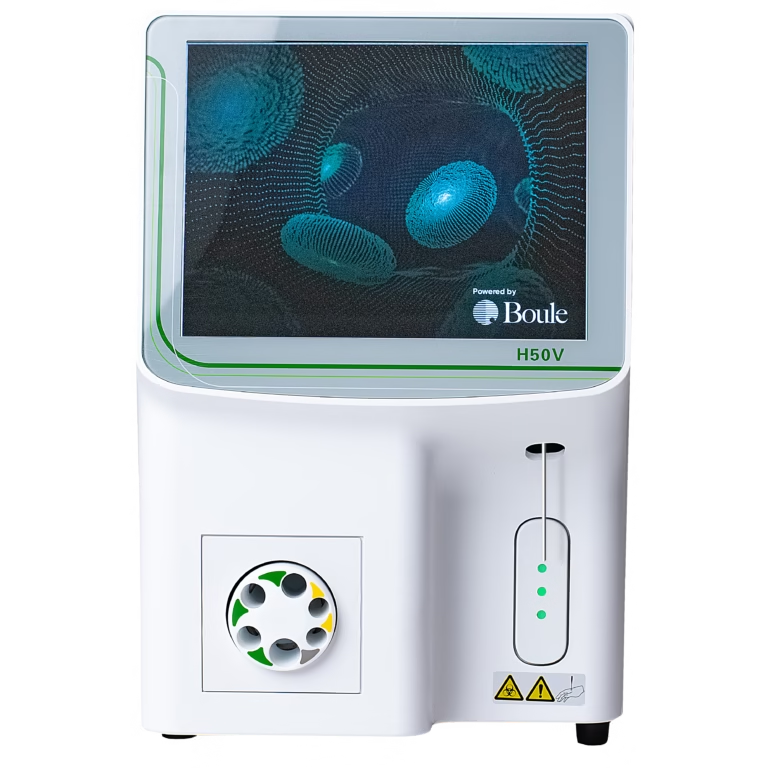
Hematological parameters were obtained from blood samples collected prior to surgery using the Exigo veterinary hematological analyzer and confirmed by microscopic examination of blood smears. The study included 45 female dogs with mammary gland tumors and 25 clinically healthy female dogs, representing breeds ranging from Chihuahua to Husky.
Study findings and clinical relevance
Results showed that a higher pre-treatment NLR value (NLR > 5) was associated with reduced survival after surgery, whereas AGR did not demonstrate predictive value for tumor malignancy.
However, by combining NLR with AGR, the dog’s age, and tumor size in a principal component analysis (PCA), the tumor grade and post-surgical survival could be more accurately predicted.
The researchers conclude that their findings suggest pre-treatment neutrophil-to-lymphocyte ratio may have prognostic value for survival following surgery in dogs with mammary tumors. The ability to anticipate tumor behavior prior to surgical intervention may be particularly relevant in older dogs or in situations where treatment decisions must consider financial limitations.
Learn more
Learn more about the clinical utility of the Exigo automated veterinary hematology system
References
1. Sarver et al. Increased risk of cancer in dogs and humans: a consequence of recent extension of lifespan beyond evolutionarily-determined limitations? Aging Cancer 3, 3–19 (2022).
2. Pastor et al. Epidemiological study of canine mammary tumors: age, breed, size and malignancy. Austral J Vet Sci doi.org/10.4067/S0719-81322018000300143 (2018).
3. Vazquez et al. Canine Mammary Cancer: State of the Art and Future Perspectives. Animals (Basel) 13, 3147 (2023).
4. Uribe-Querol et al. Neutrophil to lymphocyte ratio and principal component analysis offer prognostic advantage for dogs with mammary tumors. Front Vet Sci 10:1187271 (2023).