
Hematological Indicators for Neglected Tropical Diseases
Neglected tropical diseases (NTDs) flourish in areas of poor socio-economic conditions in developing countries. However, increased international travel, armed conflicts, and environmental changes affecting vector ecology have contributed to the emergence of NTDs also in developed regions. As many parasitic infections may remain periodically asymptomatic, there is a risk of pathogen spread by unaware carriers. Accurate and rapid diagnostic testing is therefore crucial for screening, diagnosis, and monitoring of NTDs.
Background
NTDs comprise a group of conditions prevalent in impoverished regions in tropical areas (1). They are considered “neglected” due to limited resources, low prioritization on global health agendas, and a relative lack of comprehensive research (1). Knowledge on their management is often derived from case studies rather than large-scale investigations.
Causative pathogens—including viruses, bacteria, fungi, protozoa, and parasitic worms—thrive in environments with limited access to clean water, sanitation, and healthcare (1). Many are vector-borne, involve animal reservoirs, and have complex life cycles, making control efforts challenging. Co-infections with multiple NTDs within the same population further complicate diagnosis and management (2).
Available Diagnostics for NTDs
Rapid and accurate diagnosis is essential in the control of NTDs. However, clinical laboratories in low-income settings often face financial and workforce limitations (3). Microscopic examination remains the reference method in parasitology and is relatively inexpensive, but requires substantial expertise for accurate interpretation (3).
Pathogen-specific diagnostic methods such as PCR and immunoassays can provide sensitive and specific results, but their higher per-test cost may limit widespread use in endemic regions (3).
Impaired host resistance, co-infections, and pathogen-mediated suppression of inflammatory responses further complicate diagnosis. As many NTDs are associated with anemia—either through blood loss, bone marrow suppression, inflammation, hypersplenism, hemolysis, or anorexia—the prevalence of anemia has been proposed as a useful additional indicator (4). Anemia is particularly common in infections caused by soil-transmitted helminths and Schistosoma spp. (4) and can be detected using a simple blood cell count.
Anemia as an Indicator for NTDs
A complete blood count (CBC) is a low-cost and widely available laboratory test. Compact, benchtop hematology analyzers enable CBC testing even in decentralized or resource-limited settings. In addition to hemoglobin concentration for diagnosing anemia, CBC parameters can provide insights into anemia type and possible underlying mechanisms (Table 1).
Table 1. Anemia classified based on cell morphology (6, 7)
deficient chromatin
condensation and extrusion
from the cell, with low cell
division resulting in large
ovalocytes or megaloblasts.
Vitamin B9 deficiency
Normal HGB/MCHC
High MCV/MCH/RDW
destruction due to intra- or
extra-cellular defects.
Hemorrhagic: increased blood
loss, acute or chronic.
Liver disease
defects: deficient hemoglobin
synthesis in the cytoplasm
Thalassemia
Normal RBC/HCT
High RDW
Both iron deficiency anemia (IDA) and thalassemia are manifested as microcytosis and hypochromia, with low hemoglobin concentration as a result. However, while IDA is a nutrient disorder that can be treated with iron supplementation, thalassemia is an inherited disorder that lacks management protocol and for which blood transfusion is a mainstay of treatment (9, 10). The ability to differentiate IDA from thalassemia is important, as blood hemoglobin will not be improved by iron supplementation in thalassemia patients (11). Together with determination of, for example, serum iron levels, RBC indices can be of good help (8, 11). Many formulas that include the RBC indices have been suggested to discriminate thalassemia from IDA (Table 2), of which RDW index (RDWI) followed by Mentzer index were found to provide the highest rate of correctly diagnosed patients (8, 11).
Table 2. Suggested formulas to distinguish beta-thalassemia trait (β-TT) from iron deficiency anemia (IDA) (adopted from Naizi et al. [8] and Jameel et al. [11])
Complete blood count in diagnosis of NTDs
Beyond anemia-related parameters, CBC testing yields information related to inflammation and infection. Dengue fever, for example, is commonly associated with thrombocytopenia. Neutrophilia may be observed in acute bacterial or viral infections (e.g., rabies), while eosinophilia may suggest nematode or cestode infections, acute schistosomiasis, or filariasis (5, 12).
A summary of hematological findings reported in the literature for selected NTDs is presented in Table 3.
Table 3. Hematological implications for neglected tropical diseases caused by infections (1, 13–25)
Food-borne Congenital (pregnancy, birth
Through blood/blood products Organ transplantation
Laboratory accidents
Anemia
Thrombocytopenia
Anemia
O. felineus, Fasciola hepatica,
F. gigantica, Paragonimus spp)
Anemia
Rhodesiense HAT: < 3 weeks
Brugia malayi,
Brugia timori)
Normal
Actinomycosis:
Leukocytosis
Neutrophilia
Neutropenia
Anemia
pain
Thrombocytopenia Either leukopenia or leukocytosis. Monocytosis is common.
Enhancing the outreach of diagnostic testing
Enhancing the Outreach of Diagnostic Testing
NTDs are primarily endemic in rural areas, conflict zones, and hard-to-reach regions (1). Early diagnosis is essential but depends heavily on the availability of diagnostic infrastructure (3). Initiatives aimed at expanding diagnostic outreach are therefore critical.
Science House Medicals, Boule’s distribution partner based in Bhopal, India, provides diagnostic services to government healthcare facilities. Through a public–private partnership, Science House Medicals was awarded a hub-and-spoke laboratory project by the government of Madhya Pradesh (26).
Under this model, 324 hub laboratories and 1690 spoke centers serve both urban and rural areas, ensuring geographic access approximately every 7.5 km. Blood samples collected at spoke centers are transported by motorcycle or drone to hub laboratories for analysis (Fig. 1). Results are returned via LIS/HIS connectivity, with a turnaround time of approximately 1–1.5 hours.

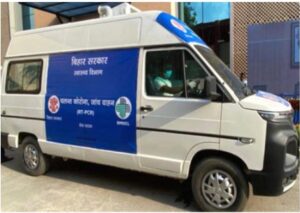
Q-Line Biotech, Boule’s distribution partner based in Lucknow, India, has received many honorary awards for contributions to improving public health in India (27). One of the later initiatives is mobile vans for coronavirus virus testing with 24-hour report turnaround time, to support RT-PCR investigation of SARS CoV 2 virus spread out in the villages (Fig 2).
Reliable Equipment Performance a Prerequisite
Hematology systems intended for decentralized testing pose specific engineering challenges (28). Instruments must be robust, require minimal maintenance, and remain reliable in environments where technical support may be distant. At the same time, systems must be cost-efficient and user-friendly, while delivering laboratory-quality results.
Fluidic System – The Heart of Automated Hematology Analysis
Although automated hematology analyzers are designed for ease of use, the underlying technology is complex. Multiple analytical methods operate in parallel to generate a complete blood count. The fluidic system plays a central role in analyzer performance, requiring precise control of pressurized fluids (29).
Piston-Driven Flow Control Versus Flow Control Using Air and Vacuum Pumps
One approach to fluidic control is piston-driven systems, which offer low liquid circuit volume and reduced reagent consumption. However, these systems may require frequent cleaning to prevent clogging due to protein buildup.
In contrast, flow control based on air and vacuum pumps emphasizes robustness and reduced mechanical complexity, lowering maintenance requirements and supporting higher instrument uptime.
The Importance of Precise Sample Aspiration
Sample aspiration is a critical factor influencing measurement accuracy. Two commonly used aspiration methods are micro-pipette aspiration and shear-valve aspiration, each with specific advantages.
Micro-pipette aspiration allows for small sample volumes, but minor volume deviations can significantly affect result accuracy. The method also requires sealed micro-dilutors and moving components, which may increase maintenance needs.
Shear-valve aspiration uses blood sensors to cut a precise volume transferred into a closed mixing chamber. This approach supports consistent sample volumes, reduces calibration frequency, and minimizes exposure to dust and impurities.
Hematology Solutions Designed for Decentralized Testing
Differences between hematology analyzers may not be immediately apparent from technical specifications or routine qualification procedures. Understanding the design principles behind different systems can therefore support informed decision-making when selecting analyzers for clinical use.
Boule hematology systems are designed for use in small hospitals and primary care laboratories (Fig. 3). Closed fluidic systems and automated cleaning procedures support reliable performance with reduced maintenance needs, contributing to high system availability.
“A blood count is a reliable, low-cost, and immediate reading test that helps us in the screening of people suspected of being infected by SARS-COV-2, and it is one of the first filters we use in decision-making”, says Dr. Fernando Bonilla, Clinical Microbiologist at Permanent Contingency Commission, Triage Center Honduras (30).
“With Swelab Alfa Plus, we have a highly reliable instrument, easy to use, with an autoloader for the automated handling of a significant number of samples, and with the capillary blood functionality for urgent cases that require an immediate count and where a tube of venous blood sample is not necessarily available. In such cases, we can use a drop of blood from the patient’s finger to obtain a hemogram with 22 parameters in one minute.”

References
- WHO: Questions and answers – Neglected tropical diseases. 9 Jan 2024 (https://www.who.int/news-room/questions-and-answers/item/neglected-tropical-diseases, accessed 2024-05-02).
- Vengesai et al. Clinical utility of peptide microarrays in the serodiagnosis of neglected tropical diseases in sub-Saharan Africa: protocol for a diagnostic test accuracy systematic review. BMJ Open 11, e042279. doi:10.1136/bmjopen-2020-042279 (2021).
- Momčilović et al. Rapid diagnosis of parasitic diseases: current scenario and future needs. Clinical Microbiology and Infection 25, 290e309 (2019).
- Bates et al. Anaemia: A Useful Indicator of Neglected Disease Burden and Control. PLoS Med 4, e231 (2007).
- Beeching, N. Fever in the returning traveller. Medicine (Abingdon) 33, 3–6 (2005).
- Lippi and Plebani. Recent developments and innovations in red blood cells diagnostics. J Lab Precis Med doi: 10.21037/jlpm.2018.07.09 (2018).
- Sarma, P.R. Red Cell Indices in Clinical Methods: The History, Physical, and Laboratory Examinations. 3rd edition (Ed. Walker H.K., Hall W.D., Hurst J.W.), Boston: Butterworths (1990).
- Niazi et al. Usefulness of red blood cell indices in differentiation of microcytic hypochromic anemias. Gomal J Med Sci 8, 125–129 (2010).
- Khaliq, S. Thalassemia in Pakistan. Hemoglobin 46, 12-14 (2022).
- Li et al. The Efficacy and Safety of Vitamin C for Iron Supplementation in Adult Patients With Iron Deficiency Anemia: A Randomized Clinical Trial. JAMA Netw Open 3, e2023644 (2020).
- Jameel et al. Differentiation of beta thalassemia trait from iron deficiency anemia by hematological indices. Pak J Med Sci 33, 665–669 (2017).
- Nader and Davari-Farid. Neutrophilia. In book: EMedicine, Edition 2013 (Ed. Emmanuel and Besa), Medscape (https://emedicine.medscape.com/).
- WHO: Health topics/Neglected tropical diseases (https://www.who.int/health-topics/neglected-tropical-diseases#tab=tab_1, accesses 2024-05-02)
- Médecins Sans Frontières: Clinical guidelines – Diagnosis and treatment manual. ISBN 978-2-37585-142-5 (2021). (https://medicalguidelines.msf.org/)
- Carter, C.M. Alterations in Blood Components. Comprehensive Toxicology 249–293 (2018). https://www.ncbi.nlm.nih.gov/pmc/articles/PMC7152208/
- MSD Manual Infectious Diseases – MSD Manual Professional Edition (https://www.msdmanuals.com/professional/infectious-diseases, accesses 2024-05-08)
- Badali et al. Biodiversity of the genus Cladophialophora. Studies in Mycology 61, 175–191 (2008).
- Enwonwu et al. Noma (cancrum oris). Lancet 367 (2006).
- Jain and Ranka. The real face of “face of poverty”: an insight on noma. Hos Pal Med Int Jnl 1, 49–52 (2017).
- Debrah et al. Association of haemato-biochemical indices and blood composite ratios with microfilaridermia in Onchocerciasis patients. BMC Infectious Diseases 24, 384 (2024).
- Nguyen et al. Exploring Blood Cell Count-Derived Ratios as Practical Diagnostic Tools for Scabies in Vulnerable Populations. J Pers Med 14, 373 (2024).
- Sharma et al. Actinomycosis. StatPearls, StatPearls Publishing; Treasure Island (FL) (2023).
- Tengsupakul, S. Taenia Infection Workup. In Pediatrics: General Medicine, Edition 2023 (Ed. Windle M.L.), Medscape (https://emedicine.medscape.com/).
- Qureshi, S. Chlamydia (Chlamydial Genitourinary Infections) Workup. In Infectious Diseases, Edition 2021 (Ed. Talavera, F.), Medscape (https://emedicine.medscape.com/).
- Waseem and Aslam. Pediatric Syphilis Workup. In Pediatrics: General Medicine, Edition 2022 (Ed. Windle M.L.), Medscape (https://emedicine.medscape.com/).
- Boule web news: Partnership for free diagnostic services (https://boule.com/news/partnership-for-free-diagnostic-services/, accessed 2024-05-14).
- Boule web news: Mobile laboratories to enhance outreach of diagnostic services to remote areas in India (https://boule.com/news/mobile-laboratories-to-enhance-outreach-in-india/, accessed 2024-05-14).
- Boule web news: Hematology analyzer design to minimize maintenance and service needs (https://boule.com/news/hematology-analyzer-designed-to-minimize-maintenance/, accessed 2024-05-14).
- Boule web news: Fluidic system – the heart of automated hematology analysis (https://boule.com/news/fluidic-system-the-heart-of-automated-hematology-analysis/, accessed 2024-05-14).
- Boule web news: Coronavirus COVID-19 diagnostics – learnings from China adopted in Honduras (https://boule.com/knowledge-center/coronavirus-covid-19-diagnostics-learnings-from-china-adopted-in-honduras/, accessed 2024-05-14).