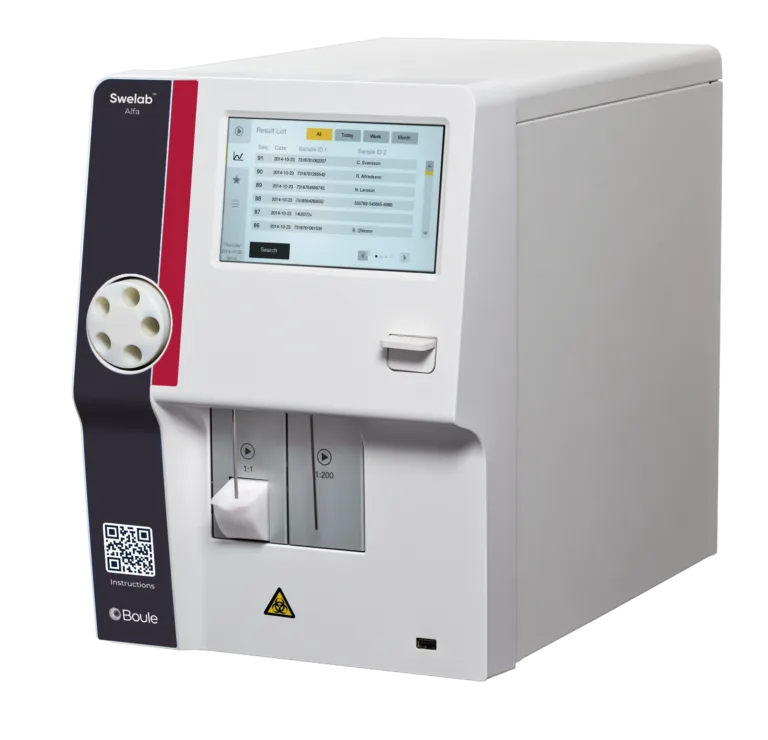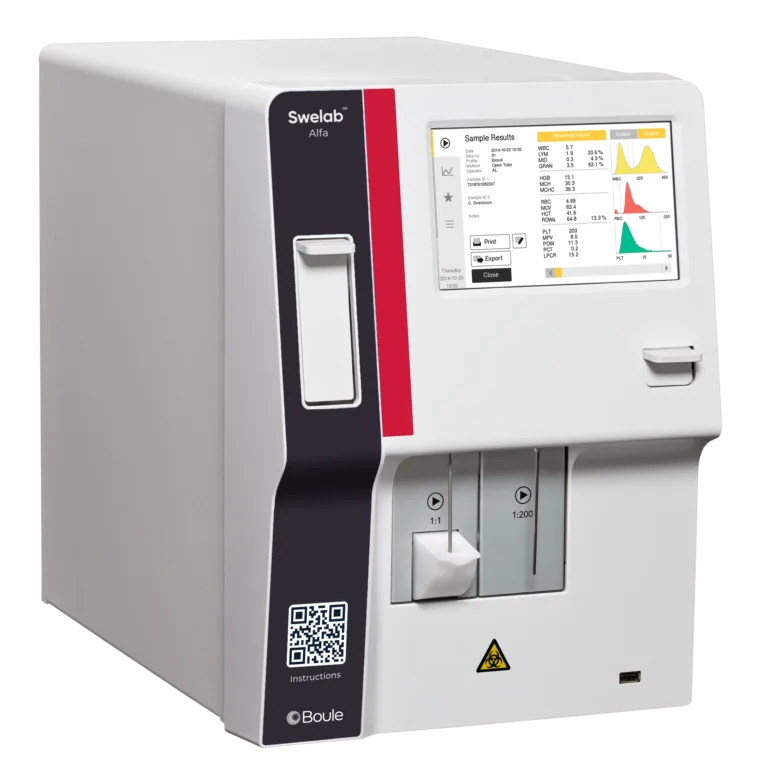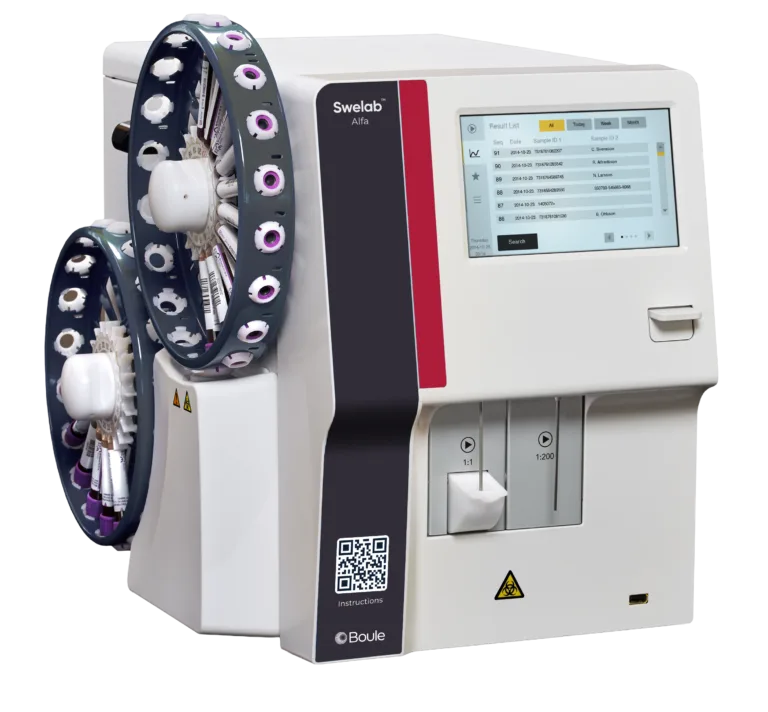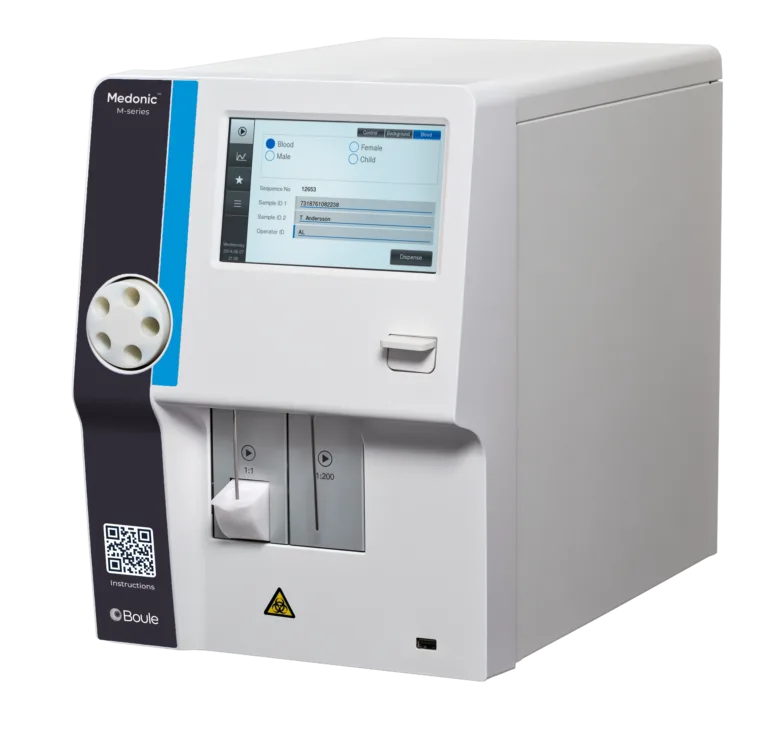
Capillary blood sampling has become an increasingly important method in CBC testing, especially in near-patient environments such as primary care clinics, donor centers, pediatric units, and decentralized laboratories. With Boule’s Micro-Pipette Adapter (MPA) method, it is possible to perform a complete CBC from just 20 µL of capillary blood, eliminating the need for venous tubes, pre-dilution, or complex preparations. This approach is equally valuable in human and veterinary care, where collecting smaller blood volumes reduces stress and handling time for pets. This article explains the key advantages of capillary CBC testing, how the MPA workflow works, and what scientific evidence shows.
Why speed matters in CBC testing
Speed plays a major role in patient care and workflow efficiency. A capillary finger-stick takes only seconds, and Boule hematology analyzers equipped with an MPA inlet deliver full CBC results (including a 3-part differential) in about one minute. This rapid turnaround is well-suited for clinics with high patient flow, emergency triage situations, donor screening, and any decentralized location where immediate results guide treatment decisions.

Reduce dependency on phlebotomy skills
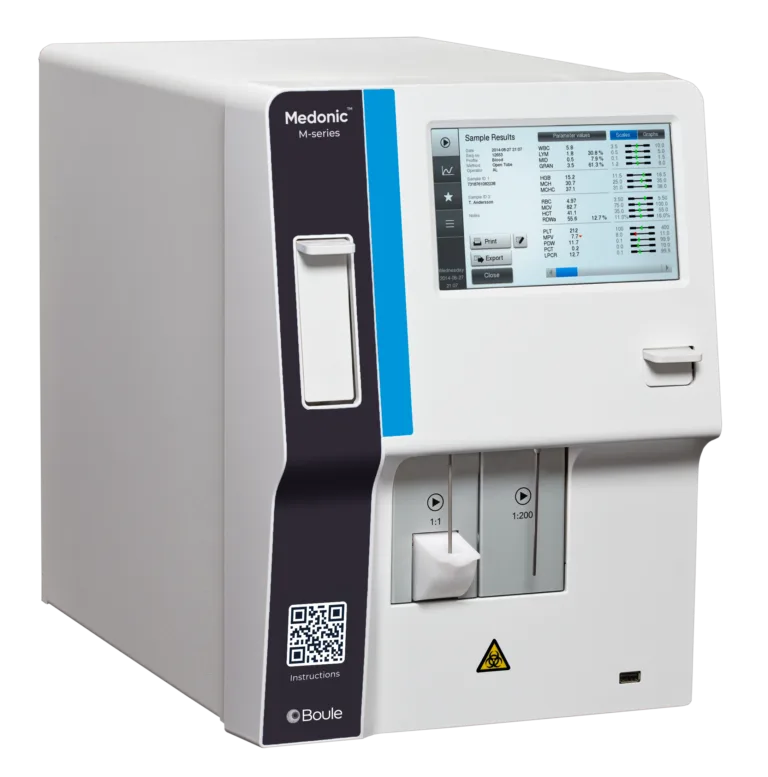
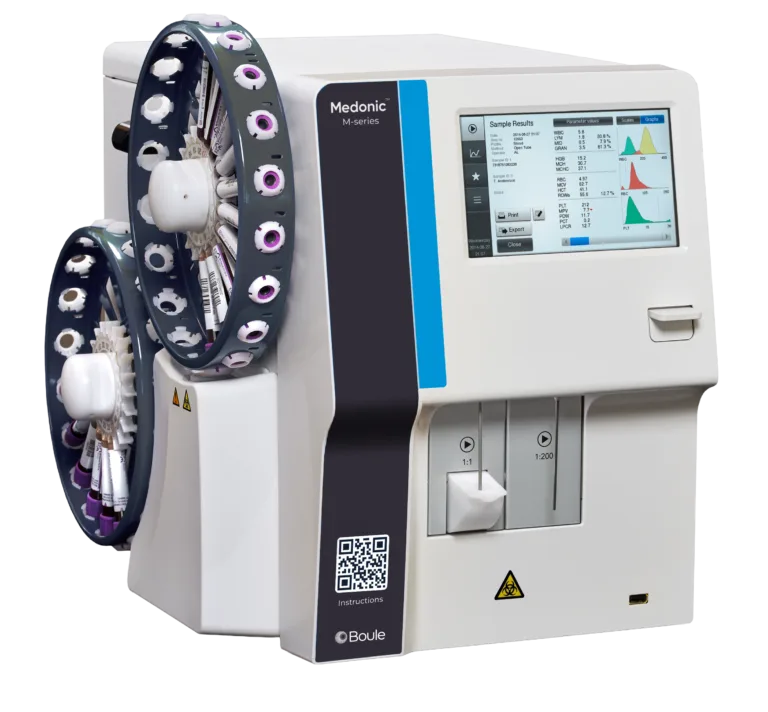
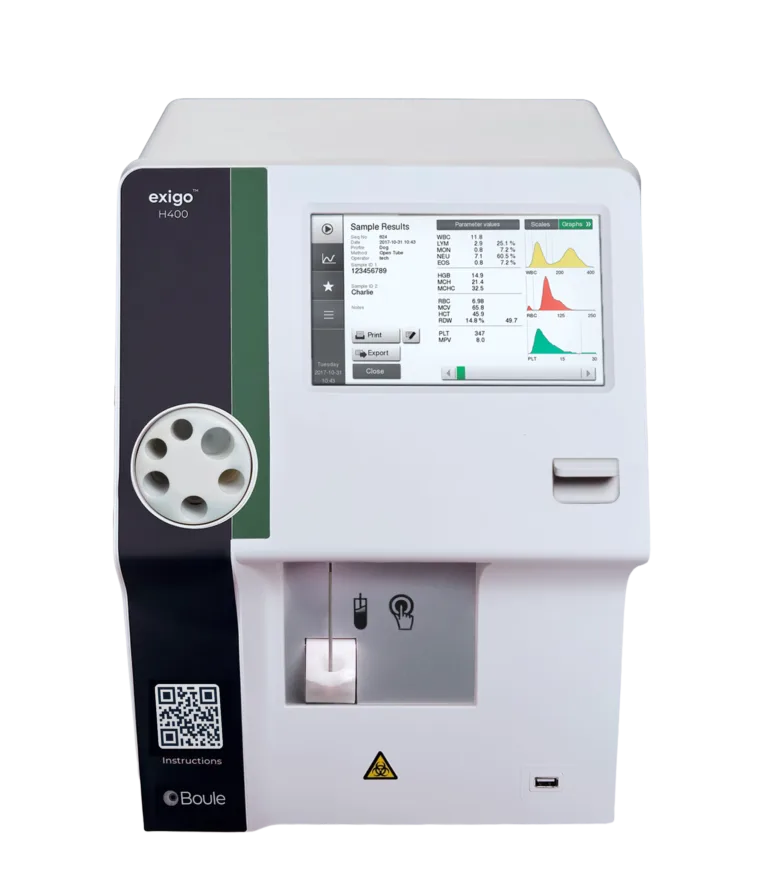
Many healthcare facilities face challenges with staffing or lack trained phlebotomists. Capillary sampling simplifies blood collection because it requires minimal expertise. The MPA inlet on Swelab Alfa Plus, Exigo H400 and Medonic M32 analyzers allows operators to collect 20 µL of blood, insert the micro-capillary into the adapter, and immediately start analysis. No vacuum tubes, mixing, or pre-preparation steps are needed.
This makes capillary sampling suitable for general practitioners, nurses, mobile units, and rural care settings.

Small sample volume, big diagnostic value
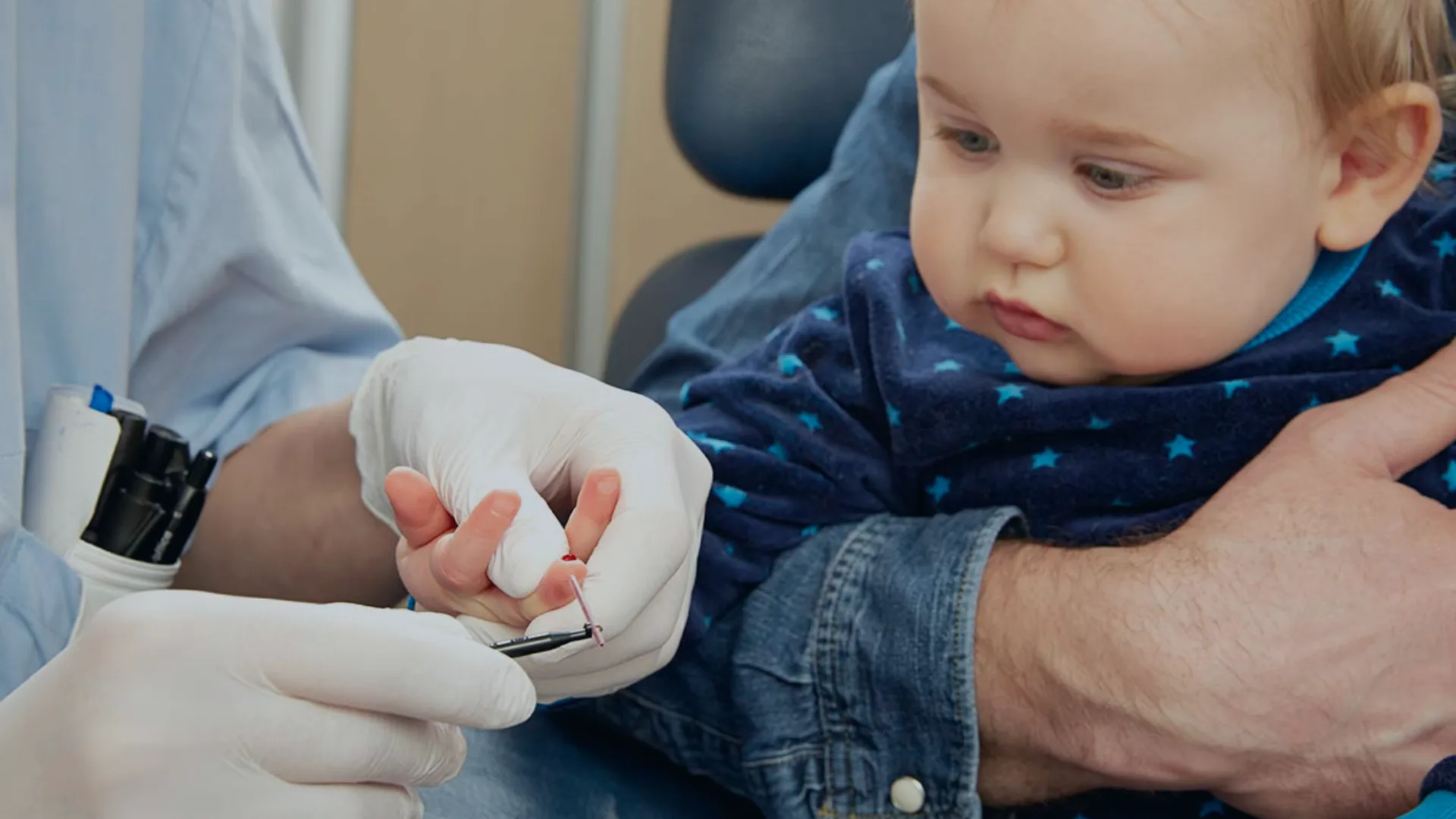
Capillary CBC testing is particularly suitable for patients where blood venous collection can be difficult or stressful, such as pediatric, geriatric, oncology, and fragile patients. Donor centers also benefit, as the method allows fast pre-donation testing while preserving the vein for the actual donation process. For veterinary clinics using the Exigo H400, the ability to collect very small volumes is especially helpful when working with cats, small dogs, or anxious animals that may not tolerate venous draws well.
Importantly, validation shows that capillary results using Boule’s MPA method closely match venous sampling. Bias values for key parameters (HGB, HCT, WBC, RBC, PLT) fall within accepted limits, demonstrating strong diagnostic reliability.

Reliable, accurate results with immediate quality feedback
One advantage of capillary sampling with MPA is that the analyzer can provide immediate feedback on sample quality. If a sample is compromised (e.g., by hemolysis or poor collection technique), it is possible to retake the finger-stick sample immediately, avoiding appointment delays or repeat visits.
Studies comparing venous tube samples with 20 µL capillary samples show that results are equivalent when proper sampling technique is followed. This includes wiping away the first drop, ensuring good blood flow, and filling the micro-capillary correctly. The same principles apply in animal sampling, where the Exigo H400 analyzer provides stable and reproducible CBC results even from low-volume capillary samples.
Efficient workflow without extra equipment
Capillary CBC testing significantly reduces the need for consumables and accessories associated with venous sampling. A capillary finger-stick requires only a lancet and a micro-capillary tube. There are no vacuum tubes to fill, less risk of incorrect blood-to-anticoagulant ratios, and no need for additional phlebotomy equipment.
This minimal setup is particularly advantageous for decentralized labs, mobile diagnostic units, outreach programs, and limited-resource environments.

Requirements for successful capillary CBC testing
To implement capillary CBC testing effectively, two things are essential:
- An analyzer with an MPA inlet.
Compatible systems include Swelab Alfa Plus, Exigo H400, and Medonic M32 models with MPA capability.
- Proper capillary sampling technique.
This includes warming the finger, wiping the first drop, and collecting a clean second drop into the micro-capillary tube. When performed correctly, the process provides results comparable to venous CBCs.
With practice, capillary sampling becomes second nature and provides accurate, fast, and patient-friendly CBC testing.
Need help integrating capillary CBC testing into your workflow? Contact your local Boule representative for guidance on implementing MPA-based sampling in your setting or contact us.
Further resources
- Capillary sample collection and analysis in (almost) real time. Watch the video
- How capillary sampling works in more detail. Read the summary
- Comparison of capillary and venous blood samples on Swelab Alfa Plus hematology analyzer. Read the application note and compare the results.