Diagnosing Iron Deficiency Anemia in Females of Reproductive Age
Long-term blood loss due to menorrhagia is a common cause of iron deficiency anemia (IDA) in females of reproductive age. Differentiating IDA from other causes of microcytic anemia, such as beta-thalassemia, is important, as these conditions require different clinical management approaches. While IDA can often be corrected with iron supplementation, moderate and severe thalassemia typically require blood transfusions (1, 2).
Causes of Iron Deficiency Anemia
Hemoglobin consists of four subunits, each comprising a globulin polypeptide that helps maintain protein solubility and a heme group containing an iron atom. Iron is essential for the oxygen-carrying capacity of hemoglobin.
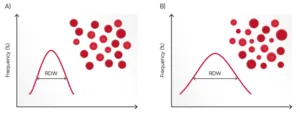
Iron deficiency in menstruating women may develop as a result of chronic blood loss without adequate iron replacement. When hemoglobin synthesis is impaired due to iron deficiency, red blood cells become unevenly small (microcytic), and increased red blood cell distribution width (RDW) may be among the earliest laboratory indicators of anemia (Fig. 1).
Iron deficiency is considered the most common cause of anemia, and it is estimated that approximately 50% of anemia cases in women worldwide are attributable to iron deficiency (1, 3).
Use of Hematological Indices in Diagnosing Iron Deficiency Anemia
Several laboratory tests—such as peripheral blood smear examination, serum ferritin, transferrin saturation, serum iron, and total iron-binding capacity—are commonly used to differentiate IDA from other microcytic anemias (4). However, some of these tests may be time-consuming or not readily available in all laboratory settings (1).
Automated hematology analyzers are widely available and can rapidly generate a complete blood count (CBC) that includes multiple parameters relevant to anemia investigations (1).
Abdulraheem and coworkers at the University of Garmiany in Iraq evaluated the diagnostic performance of various hematological discrimination indices using the Swelab Alfa Plus hematology analyzer (1). The indices assessed included RBC count, Mentzer index, RDW index (RDWI), Srivastava index, Green and King index, and Ehsani index.
The researchers found that RBC count was the most sensitive, while RDWI demonstrated the highest specificity. The Green and King index showed the highest overall accuracy for distinguishing iron deficiency anemia from other causes of microcytic anemia in females of reproductive age.

Read more from the news article about the use of RBC indices in discriminating anemias.
References
- Abdulraheem et al. Most Reliable Haematological Indices for Diagnosis of Iron Deficiency Anaemia from Non-Iron Deficiency Anaemia in Reproductive-Age Females. Annales de Pathologie 5, 24-29 (2023).
- Thalassemia International Federation: Thalassaemia https://thalassaemia.org.cy/haemoglobin-disorders/thalassaemia/ (accessed 2024-02-13).
- World Health Organization: Anaemia https://www.who.int/data/nutrition/nlis/info/anaemia (accessed 2024-02-13).
- White paper: Clinical utility of red blood cell indices in anemia investigations. Boule Diagnostics, 45000, Edition 1 (2023).